

Head injuries range widely, from a mild concussion to bleeding inside the skull. Symptoms, diagnosis and situations requiring surgery are explained.
What is a head injury?
A head injury is damage to the scalp, the skull bones and the brain caused by a blow to or jolting of the head. Falls, road traffic accidents, sports injuries, accidents at work and violence are the main causes. While a minor blow to the head often resolves on its own, some injuries cause damage to brain tissue or bleeding inside the skull and require urgent treatment.
Types of injury
- Mild head injury and concussion: This may involve brief confusion, headache, dizziness, nausea and problems with attention. It usually resolves with rest and monitoring.
- Skull fractures: Linear fractures usually do not require surgery. In a depressed fracture, a piece of bone is pushed inwards and can press on the brain. An open fracture that pierces the membranes of the brain (penetrating fracture) carries a risk of infection and requires urgent surgery.
- Intracranial bleeding (haematomas): A blood clot that collects inside the skull presses on the brain.
- Epidural haematoma: This collects between the skull and the tough membrane surrounding the brain (dura).
- Subdural haematoma: This collects between the dura and the surface of the brain; it can be acute or chronic. Chronic haematomas can develop slowly over weeks and are seen especially in older people and those taking blood thinners.
- Intracerebral haematoma: This forms within the brain tissue.
- Brain contusion and diffuse axonal injury: Damage to brain tissue as a result of impact or jolting.
Head injuries: symptoms
In mild cases there may be headache, nausea, dizziness and brief loss of consciousness. The following symptoms suggest a serious injury:
- Increasing headache, repeated vomiting
- Increasing drowsiness, difficulty waking, confusion
- Seizures
- Weakness in an arm or leg, problems with speech or vision
- Blood or clear fluid coming from the ear or nose
- Pupils of unequal size
Head injuries: how are they diagnosed?
First, the level of consciousness, the pupils, movement and reflexes are assessed quickly. The most important test for diagnosis is computed tomography (CT) of the brain; it quickly shows skull fractures and bleeding inside the skull. Where necessary, MRI, imaging of the cervical spine and blood tests are added. In a head injury, the possibility of a neck (cervical spine) injury is also kept in mind.
Head injuries: treatment options
- Observation and supportive treatment: In mild injuries, the level of consciousness is monitored and painkillers and rest are recommended. It may be necessary to avoid strenuous physical activity and sport for a while.
- Intensive care and pressure control: In severe injuries, the pressure inside the skull is monitored and efforts are made to lower it.
- Drainage of a haematoma: Surgery may be needed for haematomas pressing on the brain. Urgent surgery is considered for epidural, acute subdural and some intracerebral haematomas. The operation begins either by removing a piece of bone from the skull (craniotomy) or by making small holes in the bone (burr holes); the blood clot is drained and the bleeding vessel is controlled. Chronic subdural haematomas can often be drained through one or a few small holes.
- Surgery for a depressed fracture: The depressed piece of bone is lifted, or removed and repaired; the aim is to correct the deformity and relieve pressure on the brain. If necessary, the bone defect is later closed with a plate or similar materials (cranioplasty).
- Decompressive craniectomy: When the brain swells excessively, part of the skull may be removed temporarily to reduce the pressure.
Risks and recovery
Recovery after a head injury can take from weeks to months depending on the severity of the injury; in some people, headache, problems with attention and memory, seizures or balance problems may continue. The risks of surgery include recurrent bleeding, infection, seizures, additional damage to brain tissue and neurological deficits; these risks are discussed in detail with your doctor. Rehabilitation (physiotherapy, speech therapy and occupational therapy) is an important part of recovery.
Prevention
Wearing a seat belt in traffic, a helmet on bicycles and motorcycles, using car seats for children, making changes at home to prevent falls in older people and using protective equipment during sport reduce the risk of head injury.
Head injuries: frequently asked questions
Is it dangerous to sleep straight after a blow to the head?
Sleeping is not harmful in itself; what matters is whether the person wakes up normally when woken. If there is difficulty waking, repeated vomiting or a change in behaviour, go to the emergency department.
How long should I rest after a mild head injury?
A few days of light activity and adequate sleep are generally recommended. A return to sport and intensive activity should only take place after the complaints have completely resolved and on your doctor's advice.
I take blood thinners; should I go even if the blow was minor?
Yes. In people taking blood thinners, bleeding inside the skull can develop even after minor blows, so it is important to be assessed.
Head injuries: when should you seek care?
A specialist examination is needed if headache or dizziness persists after a blow to the head, if worsening complaints appear even a few days later, or if, especially in older people and those taking blood thinners, headache, drowsiness or balance problems develop weeks after a minor blow.
Go to the nearest emergency department in the case of loss of consciousness, repeated vomiting, a seizure, increasing headache, speech problems, weakness in an arm or leg, fluid or blood coming from the ear or nose, or difficulty waking.
Head injuries: what happens at the consultation?
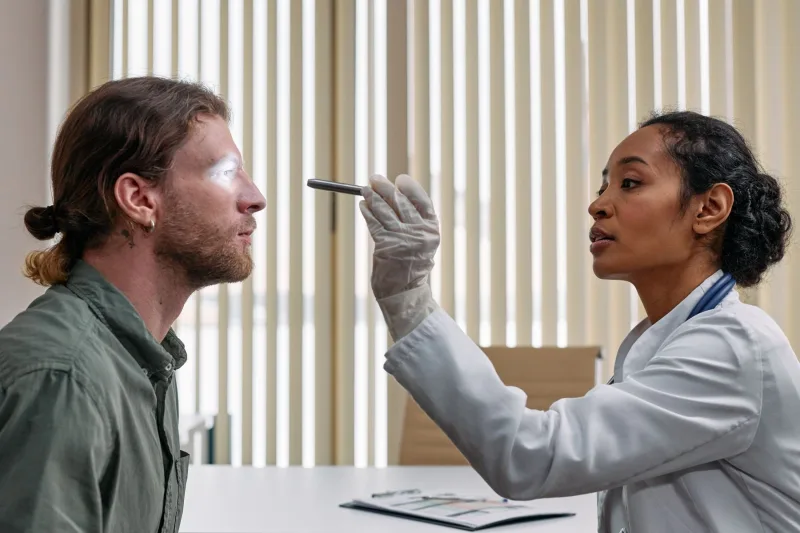
You will be asked how the injury happened and about the symptoms since. The level of consciousness and neurological status are assessed, and any CT or MRI images are reviewed; the monitoring or treatment plan is then explained.
The information on this page is for general information only; an examination is needed for a diagnosis and treatment decision. Every patient's situation is unique.