

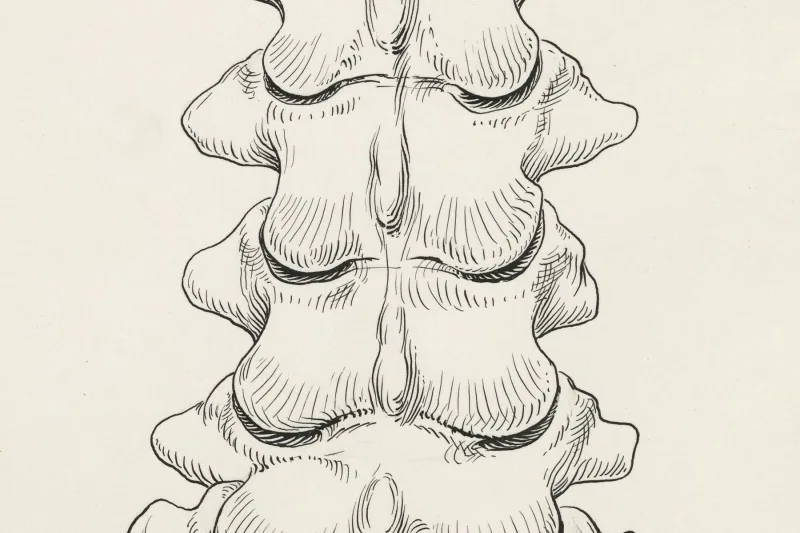
Spinal fractures are divided into compression and burst fractures. Their causes, the risk of nerve injury and treatment options such as vertebroplasty are explained.
What are spinal fractures?
If more load is placed on a bone than it can withstand, the bone breaks. The spine is no different. The most common type of spinal fracture is the compression fracture, in which the front part of the vertebra collapses. Compression fractures are usually seen in older patients as a result of osteoporosis (bone loss); sometimes even a minor strain such as a light fall, coughing or bending forward can be enough.
If the load on the spine is more severe, the middle and back parts of the vertebra can also break, and fragments of the fracture can shift towards the spinal canal and injure the spinal cord. This type of fracture is called a burst fracture. Although spinal cord injury and paralysis are common with burst fractures, not every burst fracture causes paralysis or spinal cord injury.
Fractures usually occur in a single vertebra, but in 20% to 30% of cases they can involve more than one vertebra, whether adjacent or not. For this reason, the whole spine is assessed when a fracture is found.
Causes
- Bone weakness due to osteoporosis (compression fractures)
- High-energy trauma such as a fall from height or a road traffic accident
- Tumours or infections that weaken the bone (rare)
Spinal fractures: symptoms
The most common symptom is upper or lower back pain at the fracture site that starts suddenly and worsens with movement. Over time, loss of height and a forward stoop of the back may develop. If the fracture has affected the spinal cord or nerves, weakness and numbness in the legs and problems with bladder and bowel control may occur.
Spinal fractures: how are they diagnosed?
First, a specialist determines whether the spine can still carry load and whether there is a nerve injury. A detailed neurological examination is performed for this. The fracture is shown on plain X-rays; computed tomography (CT) is used to assess the bone structure and the position of the fracture fragments, and magnetic resonance imaging (MRI) to assess the spinal cord, nerves and ligaments. If osteoporosis is suspected, a bone density measurement may also be planned.
Aims of treatment
The main aims are to prevent damage to the injured spine from progressing over time and leading to a stoop, and to prevent a spinal cord injury that was not present at first from developing as the stoop increases. Pain control and an early return to mobility are also aimed for.
Spinal fractures: treatment options
Non-surgical treatment
If the stability of the spine is preserved and there is no nerve injury, monitoring with a brace, painkillers, controlled movement and physiotherapy may be sufficient. Treating osteoporosis is also important to prevent further fractures.
Vertebroplasty and kyphoplasty
For compression fractures that have not caused neurological injury, a method called vertebroplasty is used: the collapsed vertebra is filled with bone cement under local anaesthesia. In kyphoplasty, a balloon placed inside the vertebra is inflated before the cement is injected, partially restoring the height of the vertebra. The procedures are performed through small incisions under fluoroscopy (X-ray imaging). It should be remembered that these procedures are not suitable for everyone; which patient and which fracture they are used for is decided on the basis of examination and imaging.
Surgical treatment
Surgery may be needed for fractures that disrupt the stability of the spine, press on the spinal cord or nerves, or carry a risk of progressive deformity, such as burst fractures. The aim of surgery is to stabilise the fracture and, if necessary, relieve pressure in the spinal canal. Implants such as screws and rods may be placed in the spine for this purpose. The operation may be performed from the back (upper or lower back), from the front, or both.
After surgery
After surgery, early mobilisation, a brace if necessary and physiotherapy are planned. Possible risks such as anaesthesia-related risks, bleeding, infection, nerve or spinal cord injury, implant-related problems and incomplete relief of symptoms are discussed in detail with your doctor before surgery.
Preventing fractures
For bone health, adequate calcium and vitamin D, regular walking and strengthening exercises, avoiding smoking and excessive alcohol, and making changes at home to prevent falls are helpful. People at risk of osteoporosis can ask their doctor about a bone density measurement.
Spinal fractures: frequently asked questions
Does every spinal fracture require surgery?
No. Many fractures in which the stability of the spine is not disrupted and the spinal cord and nerves are not affected can be managed with a brace, medication and controlled movement. The decision to operate is made according to the type of fracture, pressure on the spinal cord and general condition.
Is vertebroplasty suitable for everyone?
No. The method is considered for some patients with compression fractures that have not caused nerve injury; suitability is determined by examination and imaging.
How can we prevent another fracture after a fracture?
Treating osteoporosis, regular movement, exercises that increase muscle strength and measures that reduce the risk of falls help lower the risk of another fracture.
Spinal fractures: when should you seek care?
A specialist examination is needed if you have upper or lower back pain after an accident or fall, sudden back pain without a clear cause that worsens with movement in an older person, or if you notice loss of height or a stoop.
If there is weakness or numbness in the legs or arms, or loss of bladder or bowel control after an injury, go to the nearest emergency department without moving the person unnecessarily.
Spinal fractures: what happens at the consultation?
The history of the injury and your complaints are listened to, a neurological examination is performed and existing imaging is reviewed. Additional tests are requested if necessary; a treatment plan based on the type of fracture is shared with you.
The information on this page is for general information only; an examination is needed for a diagnosis and treatment decision. Every patient's situation is unique.