

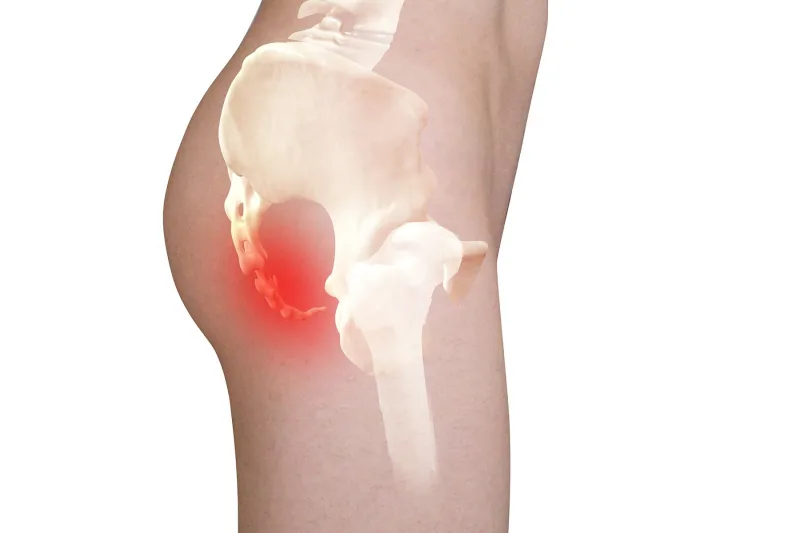
A procedure for tailbone (coccyx) pain in which medication is delivered under image guidance to the painful area or the related nerve network, aiming to ease the pain.
What is a coccyx injection?
The coccyx is the small tailbone at the very lower end of the spine. After a fall, prolonged sitting, childbirth or sometimes without any obvious cause, pain can develop in this area that is typically worse when sitting; this is called coccydynia.
During the injection, a local anaesthetic and a corticosteroid are delivered under X-ray or ultrasound guidance around the coccyx or to the nerve network that carries pain from this area (for example, the ganglion impar). The aim of the procedure is to reduce pain and make daily life and sitting easier; it does not remove the underlying cause.
Tailbone pain can sometimes arise from the surrounding tissues, the pelvic floor muscles, the lower back and sacroiliac joint or, rarely, from more serious causes (fracture, cyst, tumour). For this reason, a detailed examination and, where necessary, imaging are carried out before an injection to understand the source of the pain. Simple adjustments to the way you sit, the use of a cushion and daily habits are also an important part of treatment. An injection is not needed in every patient; in most people these simple measures are tried first, and the procedure is considered only when they are not enough.
This page is for general information only and does not replace diagnosis or treatment. Whether the procedure is suitable for you can only be decided on the basis of your examination and imaging findings.
When is it considered?
Your doctor may consider this procedure in the following situations:
- Tailbone pain that becomes noticeable when sitting and when getting up from sitting.
- Pain that continues despite simple measures (a ring cushion, painkillers, changes in sitting habits).
- Other causes, such as a fracture, tumour or infection, have been ruled out by imaging.
Preparing for the procedure
- Tell your doctor about all the medicines you take, especially blood thinners (such as aspirin, warfarin or clopidogrel) and herbal products; your doctor will decide which medicine should be stopped and when, so do not stop anything on your own.
- If you have a fever, flu or any other infection, the procedure may be postponed; let the team know in advance.
- Mention any known allergies (medicines, contrast agents, latex, iodine). Always tell the team if there is any chance you may be pregnant.
- The fasting period and sedation (light sleep) plan will be explained by the team performing the procedure; follow the instructions given.
- Bring your existing MRI, CT and test results with you; it is advisable to have someone accompany you.
How is the procedure performed?
- You lie face down or on your side; the area is cleaned with antiseptic and draped.
- The skin is numbed with a local anaesthetic.
- Under X-ray or ultrasound guidance, a thin needle is advanced to the target area; the correct position is checked with contrast agent.
- The local anaesthetic and steroid are injected, and the needle is removed.
The procedure is usually short, performed as a day case and does not require general anaesthesia.
After the procedure: recovery, discharge and activity
You are observed for a short time after the procedure and go home the same day. The tailbone may be tender for a few days. Using a ring cushion, avoiding prolonged sitting on hard surfaces and changing the way you sit can help during this period.
When the effect begins and how long it lasts vary from person to person. If the pain returns, other options are considered at a follow-up with your doctor.
Coccyx injection: alternatives
Alternatives include painkillers and anti-inflammatory medicines, changes in sitting habits, a ring cushion, pelvic floor physiotherapy, nerve blocks and radiofrequency methods; surgery is rarely considered.
Questions you may want to ask your doctor
- What is the expected benefit of this procedure for my complaint, and how long might it last?
- If the procedure needs to be repeated, how often and how many times can it be done?
- How do my medicines and chronic illnesses affect the procedure?
- What are the suitable alternatives, and why is one considered more appropriate than another?
- Which symptoms after the procedure should prompt me to contact you?
Coccyx injection: possible risks
Every procedure has possible risks and alternatives; these vary from person to person and are discussed in detail with your doctor beforehand. The main points are:
- Infection: Although the procedure is performed under sterile conditions, an infection may develop at the needle entry site or deeper; this is very rare.
- Bleeding and bruising: The risk is higher in people taking blood thinners or with clotting problems; for this reason, your medicines are reviewed beforehand.
- Possibility of nerve injury: The needle works close to nerve tissue; temporary numbness or pain may occur, while permanent damage is very rare.
- Effects related to the medicines used: An allergic reaction, a short-term rise in blood sugar, facial flushing or fluid retention may occur.
- Limited benefit: The pain may not go away completely or may return after a while.
- Possibility of injury to the bowel or structures around the rectum: The area lies anatomically close to these structures; image guidance is used to keep this possibility as low as possible.
Conditions such as smoking, diabetes, high blood pressure, excess weight and heart disease can increase the risks, so it is important to give your doctor a complete account of your medicines, allergies and medical history.
What happens at the consultation? When should you seek care?
At the consultation, the cause of the pain is explored, the coccyx area is examined and imaging is requested if necessary. The suitability of the injection is decided on the basis of these findings.
Go to the nearest emergency department without delay in the following situations: inability to control urine or stool, pain that increases together with fever, loss of strength in the legs, or swelling and redness in the area.