

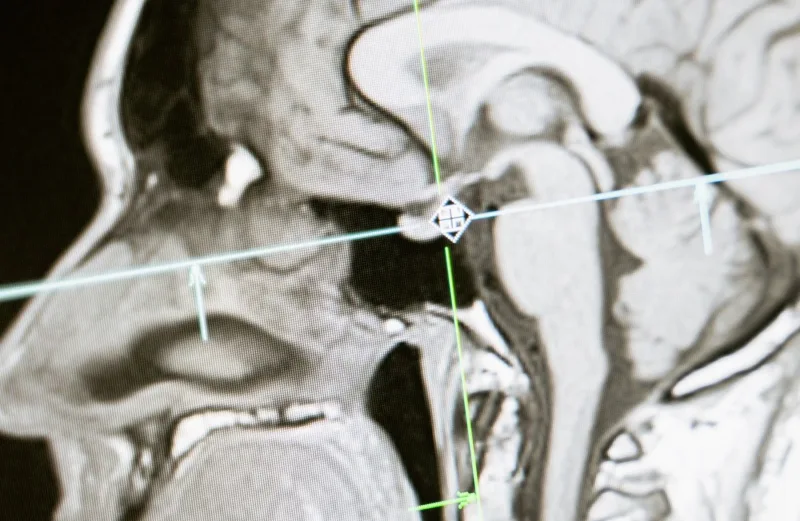
Pituitary tumours arise from the pituitary gland at the base of the brain and can affect hormone balance and vision. Diagnosis and surgical options through the nose are explained.
What is a pituitary tumour?
The pituitary gland is a bean-sized gland located at the base of the brain, just above the back of the nose. It produces many hormones that regulate the body's functions, such as growth, reproduction, metabolism, the stress response and the balance of water and salt. Tumours arising from this gland are called pituitary adenomas. The vast majority of pituitary adenomas are benign (not cancer). Other tumours and cysts arising from the tissues around the gland can also cause similar symptoms.
Types
- Functioning (hormone-secreting) adenomas: These produce excess hormone. Examples are prolactinoma (excess of the milk hormone prolactin), acromegaly (excess growth hormone) and Cushing's disease (excess cortisol).
- Non-functioning adenomas: These do not secrete hormones; they are usually noticed when they grow and press on surrounding structures.
- Microadenoma and macroadenoma: Those under 1 cm are called microadenomas, and those over 1 cm macroadenomas.
Pituitary tumours: symptoms
Symptoms are caused either by excess hormone or by the pressure of the tumour on its surroundings:
- Headache
- Narrowing of the visual field, especially loss of side vision, and double vision (when the tumour presses on the optic nerves)
- Irregular periods, milk discharge from the breasts, sexual function problems and infertility (prolactinoma)
- Enlargement of the hands, feet and facial features, increased sweating and joint pain (acromegaly)
- Weight gain, a rounded face, bruising, high blood pressure and high blood sugar (Cushing's)
- Tiredness, weakness and complaints caused by hormone deficiency
Some pituitary tumours grow for a long time without causing symptoms and are found incidentally on imaging done for another reason.
Pituitary tumours: how is it diagnosed?
Three main assessments are carried out together for the diagnosis:
- Hormone tests: Hormone levels are measured with blood tests and, if necessary, urine tests; they are usually assessed together with an endocrinologist.
- Imaging: Pituitary-focused magnetic resonance imaging (MRI) shows the size of the tumour and its relationship to its surroundings.
- Eye examination: The visual field and visual acuity are measured by an ophthalmologist to determine the effect of the tumour on the visual pathways.
Pituitary tumours: treatment options
Treatment is decided according to the type and size of the tumour, the hormone status and the person's general health; neurosurgery and endocrinology work together.
- Monitoring: Small adenomas that cause no symptoms and do not secrete hormones can be monitored with regular MRI scans and hormone checks.
- Medication: In prolactinoma, medication (dopamine agonists) is usually the first option and can shrink the tumour. There are also medication options for acromegaly and Cushing's.
- Surgery: Surgery is recommended for tumours that press on the visual pathways, whose hormone secretion cannot be controlled with medication, or that are growing.
- Radiotherapy and radiosurgery: These may be used for tumour tissue remaining after surgery or when surgery is not suitable.
- Hormone replacement: If pituitary function is reduced, the missing hormones may need to be replaced.
How is the surgery performed?
Most pituitary tumours are reached through the nose with the transsphenoidal approach, without the need for an incision on the face. The pituitary region is entered through the sphenoid sinus deep in the nasal cavity; the tumour is removed with a thin camera called an endoscope and special instruments. Alternatively, an approach from under the upper lip or from inside the skull (craniotomy) may be needed. The choice of approach depends on the size and spread of the tumour. The surgery is performed under general anaesthesia.
The aim of surgery is to confirm the diagnosis and/or to relieve pressure on surrounding structures by removing as much of the tumour as possible. It may not be possible to remove the whole tumour, and it cannot be guaranteed that vision will improve once the pressure on the visual pathways is relieved.
Risks and the post-operative period
There are risks such as bleeding, infection (meningitis), cerebrospinal fluid leakage, pituitary hormone deficiency (temporary or permanent), a disturbance of the water and salt balance (diabetes insipidus), vision problems, nasal complaints, damage to neighbouring brain tissue or blood vessels, and recurrence of the tumour. These are discussed in detail with your doctor before surgery. After surgery, hormone levels and vision are checked, and regular follow-up is carried out with MRI. Whether hormone replacement is needed is assessed together with endocrinology.
Pituitary tumours: frequently asked questions
Is a pituitary adenoma cancer?
No. The vast majority of pituitary adenomas are benign; however, they can cause problems by secreting hormones or by growing.
Is every pituitary tumour treated with surgery?
No. In prolactinoma, medication is usually the first option. Small tumours without symptoms can be monitored. Surgery is considered for tumours that threaten vision or cannot be controlled with medication.
Will I need hormone medication for life after surgery?
Some patients may develop a hormone deficiency and may need replacement treatment. This varies from person to person and is monitored together with endocrinology.
Follow-up
Regular follow-up is also needed after treatment for pituitary tumours. Follow-up visits include hormone tests, pituitary-focused MRI and, where necessary, an eye examination. If you are taking hormone replacement, it is important not to miss doses and to let your doctor know when you are ill.
Pituitary tumours: when should you seek care?
A specialist examination is needed if you have a persistent headache, narrowing of the visual field or double vision, unexplained irregular periods, milk discharge from the breasts or marked hormonal complaints.
Go to the nearest emergency department in the case of a sudden severe headache together with sudden loss of vision, double vision, nausea and vomiting, or clouding of consciousness.
Pituitary tumours: what happens at the consultation?
You will be asked about your complaints and hormonal symptoms, and a neurological examination and an assessment of your vision are performed. Your existing MRI scans and hormone tests are reviewed; if necessary, a joint assessment with endocrinology and ophthalmology is planned.
The information on this page is for general information only; an examination is needed for a diagnosis and treatment decision. Every patient's situation is unique.