

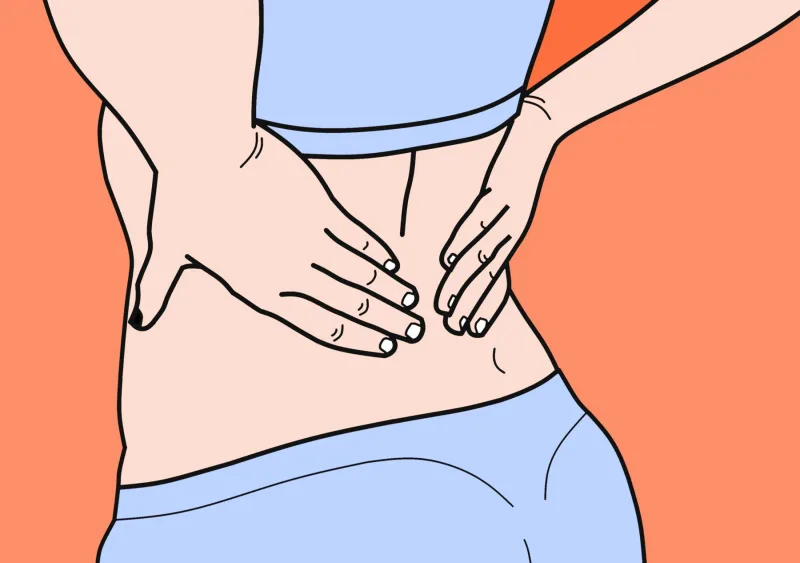
Most low back pain gets better within weeks. Some symptoms, however, need to be assessed without delay; in this article we explain which ones.
Low back pain is a complaint that most of us experience at some point in life. Most of the time it is related to strain on muscles and ligaments and gets better on its own within a few weeks. Even so, some symptoms show that the pain may point to another cause. In this article, we explain in plain language when it is reasonable to wait at home and when an examination is needed.
What is low back pain and what causes it?
Low back pain can come from the spine, the discs between the vertebrae, muscles, ligaments or nerves. The most common cause is muscle and ligament strain due to a sudden movement, heavy lifting or sitting badly for a long time. Less often, conditions such as a herniated disc, narrowing of the spinal canal (spinal stenosis), arthritis of the spine or weak bones lead to pain.
What is done for most low back pain?
The advice of health organisations is to stay as active as possible and carry on with daily activities. Long periods of bed rest usually do not help; inactivity can weaken the muscles and make the pain last longer. Heat or cold, painkillers considered suitable by a doctor, and light movement such as walking can bring relief. If the pain does not ease markedly within a few weeks despite these measures, it is time for an examination.
Symptoms that should be assessed without delay
If you have any of the following symptoms, you should see a doctor without telling yourself "I'll wait a bit longer":
- Weakness or numbness in both legs at once, or the foot giving way
- Numbness in the genital area or around the bottom (saddle numbness)
- Difficulty holding urine or stools, or not being able to feel them at all
- Severe pain starting immediately after an injury such as a fall or an accident
- Low back pain together with fever
- Unexplained weight loss, a change in the shape of the lower back or a lump you can feel
If there is loss of strength, loss of bladder or bowel control, or numbness in the genital area, go to the nearest emergency department without delay. These symptoms may indicate serious pressure on the nerves, and rapid assessment is needed.
Other situations that suggest you should be examined
- The pain not improving within weeks or getting steadily worse
- The pain being bad enough to wake you from sleep, or getting markedly worse at night
- Pain shooting down the leg when coughing or sneezing
- The pain spreading to the leg, the knee or the foot
- The pain markedly disrupting your daily activities and sleep
What happens at the examination?
At the examination, you are first asked when and how your complaint started and what makes it better or worse. Then spinal movements and strength, sensation and reflexes in the legs are assessed. Not every case of low back pain needs imaging; if considered necessary, an X-ray, MRI or another test is requested. The aim is first to understand the source of the pain and then to plan the options that suit you, non-surgical where appropriate.
To stop low back pain coming back
- Move regularly at a pace that suits you; walking and swimming are among the activities often recommended.
- Lift heavy loads by bending your knees and keeping the load close to your body.
- Avoid sitting in the same position for long periods; get up and walk around in between.
- Keep your weight under control; stopping smoking is recommended, as smoking can damage the tissues that nourish the discs.
The difference between acute and chronic low back pain
Pain lasting from a few days to a few weeks is called acute, and pain lasting more than three months is called chronic low back pain. Acute pain usually settles on its own. In chronic pain, rather than simply taking painkillers, a comprehensive plan is made, such as investigating the cause, exercise and, if necessary, physiotherapy and correcting posture habits. In long-standing pain, an examination is useful both for understanding the cause and for avoiding unnecessary tests and medication.
Frequently asked questions
Should I have an MRI straight away for low back pain? Most of the time, no. If there are no warning signs such as loss of strength, fever or an injury, imaging in the first weeks usually does not change the treatment plan. The decision about imaging is made after the examination.
Is it better to rest or to keep moving with low back pain? A short rest in the severe first days can bring relief; however, long periods of bed rest are not recommended. Continuing with movements that do not greatly increase the pain supports recovery.
Can low back pain be a sign of cancer? This is very rare. However, symptoms such as unexplained weight loss and pain that wakes you at night and does not ease with movement are an additional reason for an examination. These symptoms do not on their own mean a disease; they only show that a more careful assessment is needed.
Habits that make pain worse or better
Sitting for long periods, working bent forward, lifting heavy loads and not getting enough sleep make low back pain worse in most people. On the other hand, regular walking, gentle exercises that maintain muscle strength, a suitable mattress and pillow, and reducing stress can have a positive effect on the course of the pain. These measures do not replace treatment, but they help you cope with the pain before and after an examination.
If you are worried, it is always better to ask than to wait; after an examination, you will most often learn that the pain is harmless and feel reassured.
When should you seek care?
If your pain has not gone away for a few weeks, is spreading to your leg, or you notice any of the warning signs above, it is right to make an appointment. You can get information about an examination by calling +90 501 321 12 13. If you have emergency symptoms, go to the nearest healthcare facility without waiting for an appointment.
This article is for general information only and does not replace an individual diagnosis or treatment. An examination is needed for a diagnosis and treatment decision.